
The study was funded by the Austrian Road Safety Fund (Österreichischer Verkehrssicherheitsfonds, abbr. VSF) of the Federal Ministry for Climate Action, Environment, Energy, Mobility, Innovation and Technology (BMK).
Background & Scope
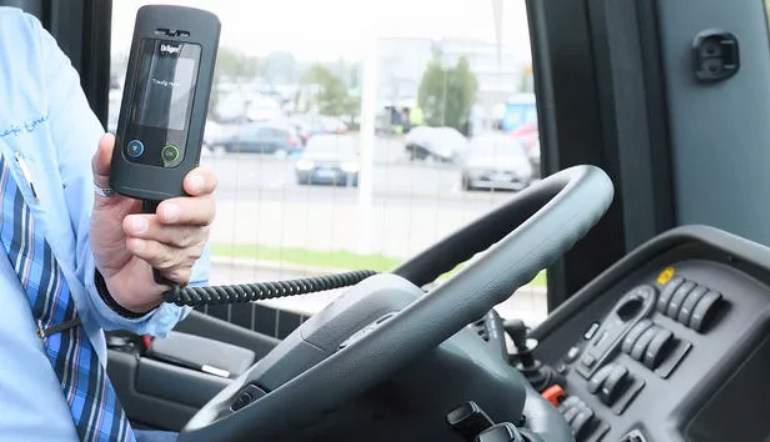
On September 1, 2017, the regulation of the Alternative Probation System (APS) with alcolock came into force in the form of a pilot project - limited to five years - for people whose driving license was revoked for at least four months due to an alcohol offense. The installation of an alcohol immobilizer ("alcolock" or "alcohol interlock") made it possible for drivers with driving license class B (and BE) to regain their driving license earlier.
The regulation stipulates that no earlier than half of the officially ordered withdrawal period can be replaced by voluntary participation in the drink-drive rehabilitation programme for the remaining time.
Participation requirements foresee that for the period of twice the remaining withdrawal period (but at least six months), only vehicles with an Alkolock device may be driven; in addition, the participants must attend so-called "mentoring talks" at two-month intervals. On the one hand, these measures are intended to prevent driving under the influence of alcoholon the other, the associated social risks (eg. job loss) sgould be minimized.
Method
The Federal Ministry of Mobility initiated an evaluation study that included surveys and analyzes on several levels: An assessement by the authorities regarding their efforts as well as a questionnaire for the implementing & monitoring body (Austrian Workers' Samaritan Federation), Best Practice Identification, Questionnaires for both participants and mentoring coaches and a analysis of recidivsm rates and accidents.